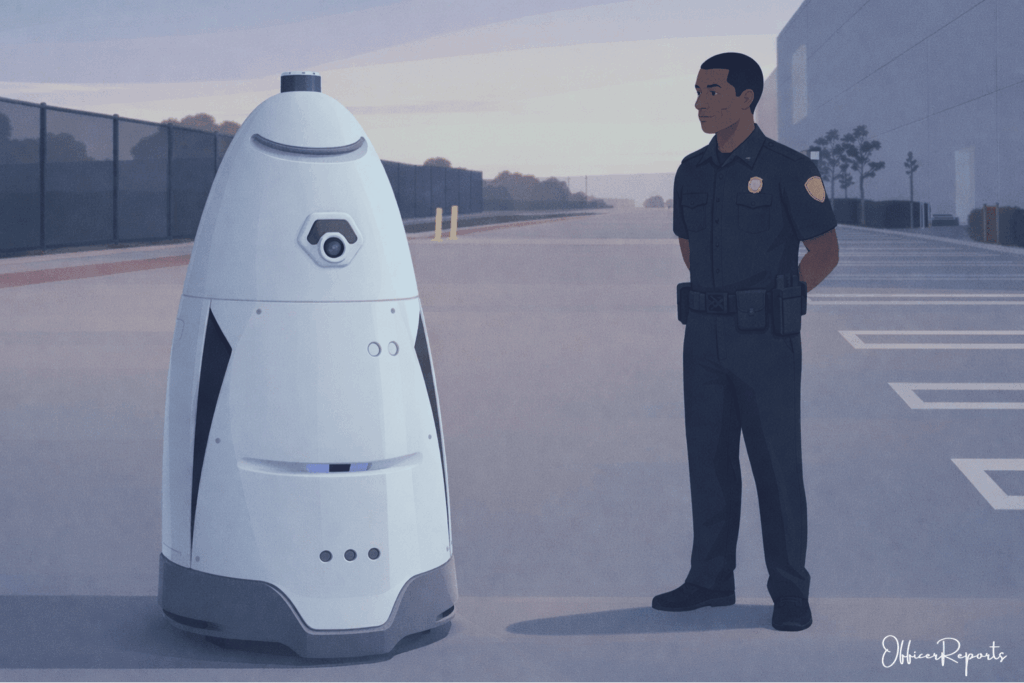
A few years ago, I was convinced security robots were going to reshape the private security industry in a meaningful way.
The many demonstrations I saw and the presentations I sat in on were impressive! Since then, autonomous robots have been moving confidently across the ASIS GSX floor since then. The robotic company pitches were straightforward and compelling. Robots meant lower labor dependency, 24-hour coverage, and data-driven patrol operations that did not rely on whether the robot had called off work or was a no-call-no-show. I will admit that at the time, it felt less like speculation and more like inevitability.
Today, I am more measured in that assessment. Not because the technology failed, because it hasn’t. Not because robots disappeared from the market, because they haven’t. My shift has less to do with capability and more to do with economics, operational structure, and the realities of how private security companies actually deliver value.
The more relevant question to me now is not whether robots can or will work. It is whether widespread robotic adoption makes business sense for most security guard service companies and their clients.
Separating Headlines from Commercial Reality
To make sure I’m level set, let’s get on the same page about the robots I’m talking about. When robots in security are discussed publicly, the scale of adoption is often misunderstood. Globally, the most significant growth in robotics has occurred in military and defense applications. Autonomous ground vehicles, aerial systems, and battlefield robotics represent an enormous and rapidly evolving sector. Those deployments, however, should not be confused with commercially placed security robots in private sector operations.
In the commercial environment, security robots are typically mobile platforms equipped with cameras, sensors, mapping systems, and communication tools. Their primary function is to collect and transmit data. They patrol defined routes, monitor conditions, and alert human operators when anomalies occur. They are not independent decision makers, nor are they replacing entire guard forces.
Adoption in private security exists, but it remains targeted. Robots are deployed in specific environments such as large campuses, industrial facilities, and exterior parking areas where repetitive patrol and data collection are central to the post. That is a far more restrained reality than the early fear of wholesale replacement of security officers, which I never really believed.
What Security Robots Are Actually Competing Against
One reason enthusiasm has tempered is that robots did not enter an industry that was technologically stagnant. They entered a market that was already starting to adapt in multiple ways due to labor pressure and client expectations.
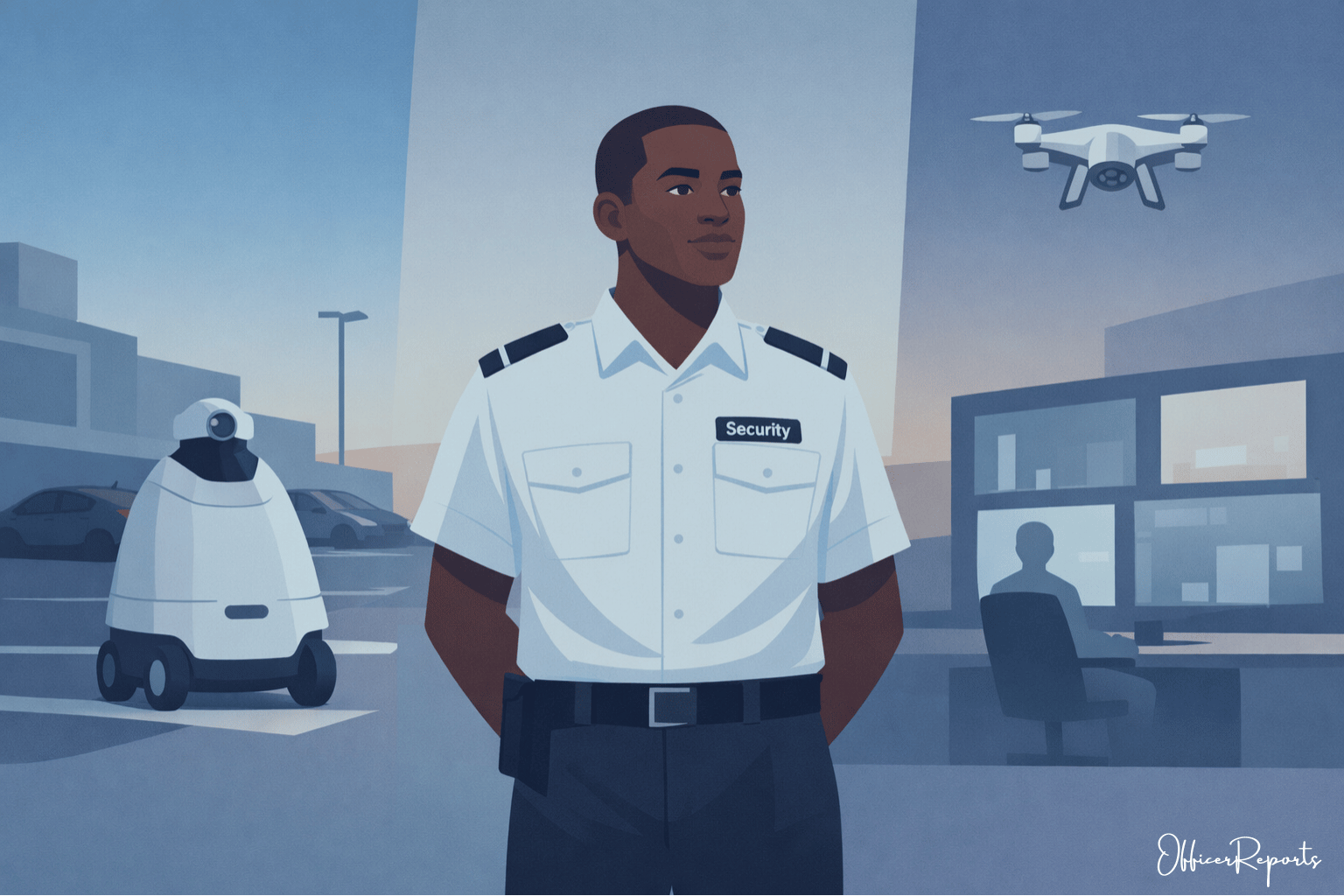
A few examples of these adaptations are: 1) Remote monitoring centers have expanded significantly over the past decade. 2) AI-enhanced camera analytics can flag motion, detect anomalies, and reduce the need for constant human review. 3) Drone patrol programs are increasingly viable in large exterior spaces. 4) Mobile patrol models allow companies to cover broader territory with fewer static posts.
These alternatives are important because they shape the economic comparison for adopting security robots. When a client evaluates robotic patrol, it is rarely against a blank slate. It is compared against the alternatives, many of which will require less capital investment and less structural change from the guarding company.
If a security firm can reduce on-site hours by layering video analytics with mobile patrol units, the threshold for justifying a robot becomes higher. In most cases where robots are truly an option, the robot must offer a clear operational and financial advantage, not just serve as a technological novelty.
The Pricing and Structure Question
There is also a practical hesitation that surfaces that is rarely emphasized in marketing materials. Robots are not simply a piece of equipment that can be dropped into an existing security company business model. They require significant capital outlay or long-term leasing agreements. They require maintenance, servicing, software management, and integration with the security company’s infrastructure. In some instances, they may require staff who understand how to operate and troubleshoot them.
For a small or mid-sized security company, this represents a structural challenge. In adopting robots, the business moves from primarily managing labor and client relationships to managing hardware life cycles and technical support functions. At a minimum, they have to serve as the initial point of contact for clients who have deployed the robot on site.
Clients recognize this as well. Even when robots are positioned as cost-effective over time, the upfront perception can be that they are expensive and experimental compared to established models like remote monitoring or mobile patrol. In an industry where margins are tight and contracts are scrutinized closely, that initial hesitation is not irrational; it is the sign of prudent decision-making.
Where Security Robots Make Sense
None of this diminishes the fact that robots can add value to your company’s service portfolio. On sites where repetitive patrolling is required and public interaction is limited, robotic systems can provide effective functionality. They can illuminate blind spots and expand situational awareness across large exterior footprints.
When appropriately integrated, robots can function as part of a layered approach in which machines collect information, human officers interpret it, and respond appropriately. In that scenario, the technology complements human judgment rather than replacing it.
This distinction has been, and will always be, the critical factor in deciding whether to deploy robots. Security, particularly in commercial environments, is not solely about observation. It is about interpreting what is seen and exercising discretion in response, and those remain the strengths of human security officers.
A Strategic Decision, Not a Trend
For security guard service companies considering whether to incorporate robotics into their offerings, the decision should be strategic rather than a reaction to the latest cool tech. As you know, security firms are built on client relationships, risk assessment, rapid response, and local accountability. So layering robotic services into an existing portfolio may be viable in some of your select markets or for select clients. But repositioning your company as a robotics provider is a much larger undertaking with different cost structures and support models.
We should all recognize that innovation in private security is necessary to ensure our industry evolves. But evolution is not defined by chasing every emerging technology. It is defined by disciplined integration of tools that strengthen your core competencies and improve client outcomes.
A More Grounded View of the Future of Security Robots
My early enthusiasm for security robots stemmed from the belief that meaningful technological advancement can and will elevate the industry. I still believe technology like OfficerIntelligence will continue to reshape how we operate. But what has changed is my understanding of where robotics fits within that evolution.
Robots are not a passing phase, but they are not a universal solution either. They are one tool among many in the security landscape that already includes remote monitoring, drones, analytics, AI, and mobile patrol strategies. In many cases, those alternatives are simpler and more economically accessible. Widespread robotic adoption in private security is, therefore, less a question of possibility and more a question of practicality for security guard companies.
In closing, the future is not as flashy as the early headlines about security robots suggested. It can, however, be well aligned with how security companies actually operate and how clients ultimately measure value.
By Courtney Sparkman
 Courtney is the founder and CEO of OfficerApps.com, a security guard company software provider, specializing in security guard management software, and publisher of Security Guard Services Magazine. He is a renowned author and security industry syndicator who also hosts an active YouTube channel, helping thousands of his subscribers to grow their security guard services companies.