Security company operations have become increasingly technology-driven through the use of security guard management software. Those companies get access to patrol software, Real-Time GPS tracking, AI-assisted reports, automated scheduling, and dashboards for everything. The software promises to give the security company everything that it needs, including more visibility, greater efficiency, and more accountability for its security officers.
Yet many guard companies invest in new systems and discover that very little actually improves. Reports are still late. Supervisors are overloaded. Payroll remains tense. Clients still escalate the same issues. When that happens, owners have to realize that the problem is not the tools. The problem is the underlying structure of security company operations.
In these cases, technology doesn’t fix the operational disorder, it exposes it.
The Foundation of Strong Security Company Operations
Well run security operations are built on clarity, ranging from clear chains of responsibility, to hiring standards that align with performance expectations. Generally speaking, software does not create these conditions, it compounds the strengths and/or weaknesses in your processes.
If post orders are vague, software will not clarify them. If supervisors do not consistently review reports, dashboards will not enforce that behavior. If officers are unclear about expectations, automation will not create accountability.
This is where many owners miscalculate. They expect the software to create alignment. Instead, the software creates visibility. And visibility without operational discipline exposes performance gaps.
When Security Company Operations Lack Discipline
Over the years, I have seen companies say they want stronger field accountability and cleaner reporting, but it baffles me when they say that they are going to continue doing the same thing that they have been doing because the officers resist using the system.
At this point, the leadership hesitates, and what was introduced as a new standard gradually fades away. At that point, the issue is no longer the technology. It is a decision about operational discipline. Although I am the first to recognize the importance of getting buy-in from your frontline security staff, allowing them to dictate the company’s overall strategy seems like a gamble.
Improving security company operations often requires raising standards, which inevitably creates pressure. Not everyone will adapt to tighter operation requirements or stronger oversight. I share with all of our new customers that some turnover is normal when your operational expectations increase.
When leadership allows resistance to override improvement, the operational baseline resets to its previous level. The system is labeled ineffective, but in reality, it only exposed the limits leadership chose not to push past.
Who Sets the Standard in Your Operation
The Illusion of Operational Progress
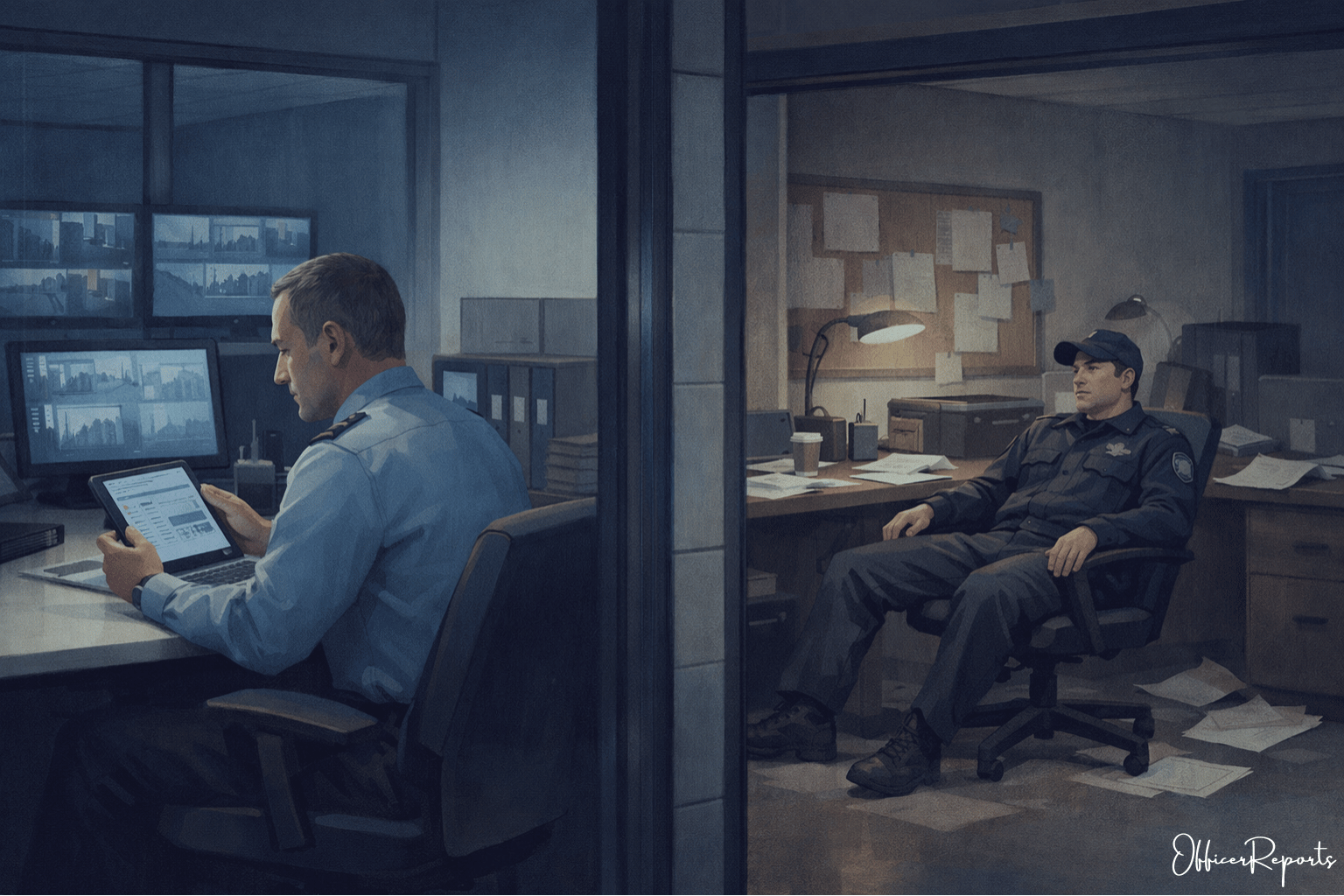
As security companies grow, it becomes easy to mistake motion for momentum. As the company grows, activity increases, systems multiply, and investments in new tools create the appearance of forward movement. From the outside, it looks strategic. Internally, it can feel like modernization and progress toward a more sophisticated operation.
The problem is that sophistication without operational clarity often exposes or produces more complexity faster than performance can improve.
That’s because when operational standards are inconsistent, new systems simply house old habits in more advanced environments. Late reports are now submitted through a modern platform, but remain late. Payroll errors move through automated workflows, but are still errors. Dashboards populate with detailed metrics that no one reviews with discipline or uses to drive corrective action. The organization has become more technologically equipped, yet has developed no more control over its operations.
Real progress in security company operations rarely comes from layering additional tools onto a shaky foundation. It comes from strengthening the underlying structure, clarifying expectations, enforcing standards, and building consistency into daily execution. Once that foundation is solid, technology can amplify results. Without it, technology only magnifies inefficiency.
When Technology Strengthens Security Company Operations
None of this suggests avoiding technology, but it does suggest intentionally creating structured environments that leverage technology to improve your system’s performance.
When post orders are clear, supervisors review consistently, and accountability is enforced, software becomes a multiplier. In strong security company operations, tools can feel transformative because they sit on top of discipline.
Remember, structure first. Technology second.
The Real Constraint in Security Company Operations

.