Artificial intelligence is rapidly making its way into the security industry. Many platforms now promote AI generated reporting as a way to make officers write faster, cleaner, and more professional reports. At first glance, that sounds like progress.
But according to a recent legal analysis prepared for OfficerReports, using AI to rewrite or generate security guard reports may create significant legal and operational risks for security companies.
That matters because security reports are not ordinary business documents. Daily activity reports, incident reports, and officer narratives are often used as evidence in civil and criminal proceedings. In many cases, they are subpoenaed years after an incident occurs.
The core problem is simple: reports are supposed to reflect what the officer personally observed, heard, and did.
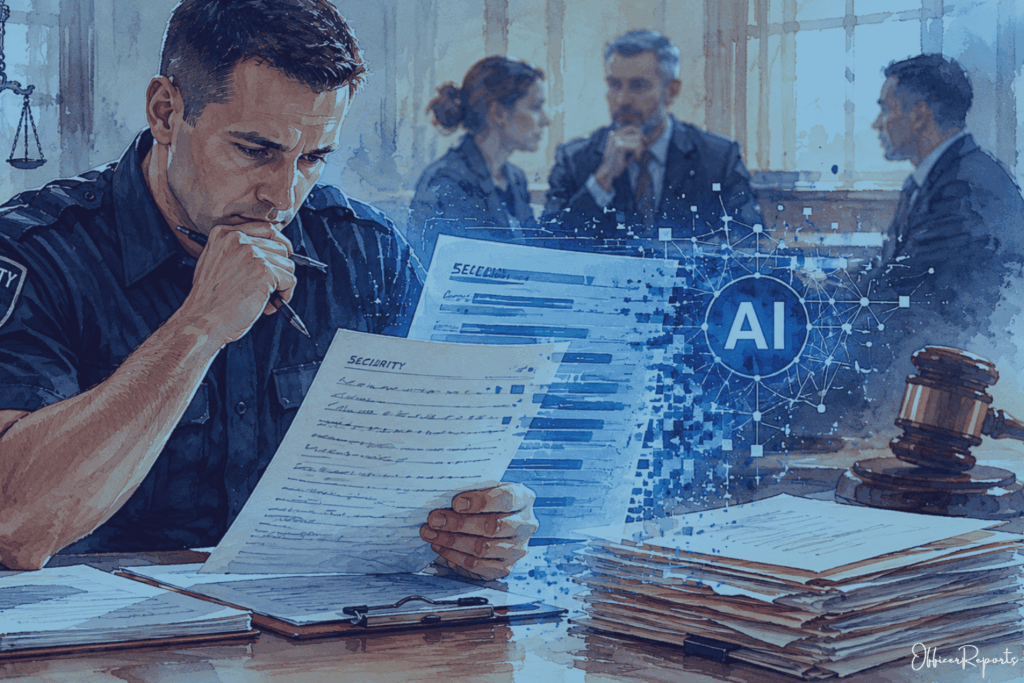
When AI begins rewriting, embellishing, expanding, or generating portions of those reports, the line between human observation and machine generated language can become blurred. According to the legal opinion, even the mere involvement of AI in report preparation could create challenges around credibility and admissibility in court.
The opinion also highlights several specific concerns.
One is hallucination risk, where AI systems generate details that were never actually observed. Even small inaccuracies involving timelines, witness descriptions, quotes, or event details could damage the credibility of a report.
Another concern is evidentiary integrity. Security reports are often relied upon years later when officers may no longer remember the incident or may no longer work for the company. Courts place importance on reports being created from the officer’s own recollection at the time of the event. AI assisted wording could create doubt about whether the report truly reflects the officer’s independent observations.
The opinion also raises concerns about discovery, privacy, and confidentiality. If external AI systems are used, companies may later have to disclose what AI platform was involved, what prompts were entered, how reports were edited, and whether sensitive information was transmitted externally.
Perhaps most importantly, specific wording matters in security reporting. Small differences in phrasing can materially change legal meaning. AI systems may unintentionally alter that meaning while trying to make a report sound more polished or professional.
This is why OfficerReports has taken a very different approach to AI.
Instead of using AI to rewrite officer reports, our focus is on helping security companies organize, analyze, summarize, and surface operational intelligence while preserving the officer’s original report as written.
That distinction matters.
The future of AI in the security industry is not about replacing officer observations. It is about helping companies better understand and operationalize the information they already have.
You can download the full legal opinion here.