If you operate a security guard company in California or manage California operations as part of a national firm, you have likely heard of the Private Attorneys General Act (PAGA). What many companies still underestimate, however, is just how quickly PAGA can turn small operational gaps around meal and rest breaks into an existential threat to your company. For those of you not in California, keep reading because other states are interested in passing this type of legislation.
As I understand it, PAGA allows employees to step into the shoes of the state and pursue civil penalties for labor code violations. In the security guard industry, meal and rest break compliance is one of the most common and dangerous areas of exposure. Not because companies are intentionally doing the wrong thing, but because the operational realities of a security officer’s work make compliance difficult without formal systems in place.
Please remember that this article is intended to be educational only and not legal advice. Security companies should consult qualified counsel regarding their specific obligations. If you do want to talk with an attorney about PAGA, you can reach out to the Law Offices of Bradley and Wellerstein, legal advisors to CALSAGA. They gave a very informative presentation on PAGA at the annual CALSAGA conference.
Why Meal and Rest Breaks Are So Risky for Security Companies
Security officers work alone. They work fixed posts. They work long shifts. They often cannot leave a site without coverage. All of this can create friction with California’s meal and rest break requirements.
Under California law, an officer working an eight-hour shift must be provided a meal period within the first five hours, with longer shifts introducing additional requirements.
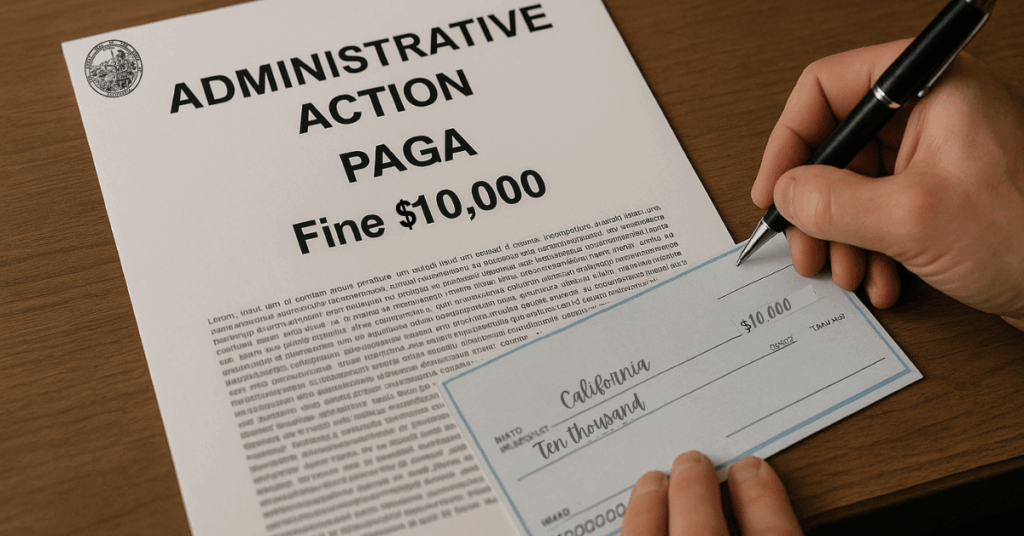
The risk is not limited to one missed break. PAGA penalties can accrue per employee, per pay period, for the same type of violation. What starts as a single operational issue can quickly compound into a company threatening exposure.
The biggest problem I see across the industry is not bad intent. It is the lack of a formal, consistent process to manage meal and rest breaks in real time and document what actually happened.
PAGA 2.0 and the Shift Toward Fixing Problems
Recent PAGA reforms, often referred to as PAGA 2.0, were designed to encourage employers to fix problems rather than simply be punished for them. The reforms place greater emphasis on good faith efforts, prompt correction of violations, and meaningful documentation.
This is a significant change for security companies. Acting in good faith is no longer just a legal concept. It must be operationalized. Companies need systems that help prevent violations when possible, surface issues immediately when they occur, and document the facts when exceptions happen.
PAGA 2.0 does not eliminate risk, but it does reward companies that can demonstrate they are actively trying to comply and promptly address breakdowns.

The Operational Reality: Breaks Do Not Always Happen Cleanly
In the real world, as we all know, an officer may not be able to take a meal break on time. Coverage may be unavailable. A client may refuse to allow the officer to leave the post. An incident may occur just as a break is scheduled. Because of PAGA, the worst thing a company can do in these moments is ignore them or rely on after-the-fact explanations of what occurred, with no documentation.
The key to an effective PAGA strategy is for security companies to know in real time when a break is approaching, when it is late, and when it did not occur as expected. They also need to capture whether a shortened or missed break was voluntary or involuntary, and why.
What a Real PAGA Risk Reduction System Must Do
After in-depth research on PAGA, OfficerApps identified that a complete PAGA-focused system for security companies must include several key capabilities.
PAGA Strategy For Security Guard Companies:
For those looking for a robust meal break monitoring system, there are four (4) key parts.
- Officers should receive proactive notifications when meal and rest breaks are approaching, with configurable alerts such as the fourth or fifth hour of a shift. If a break cannot be taken, the company should be notified immediately, not days later during payroll review.
- If an officer clocks out late for lunch, someone should know. If a meal period is shorter than thirty minutes, the system should prompt the officer to explain whether the situation was voluntary or involuntary, with the ability to capture comments and context through an interactive dialogue.
- At the end of the shift, officers should be required to affirm whether they received all required meal and rest breaks. This declaration should be mandatory before clocking out, creating a contemporaneous record.
- Just as important, all of this activity must be documented. Time punches. Notifications. Officer responses. Comments. Exception handling. This information should be organized into clear PAGA exception reports that show where issues occurred and how the company responded.
Why Documentation Is the Difference Between Risk and Defense
PAGA reform is all about trying to fix things. But companies can only demonstrate good faith if they can show what happened, when it happened, and how they responded.
Relying on spreadsheets, memory, or manual follow-up is not enough. In a PAGA claim, documentation is everything. The absence of records often becomes the story.
That reality is why OfficerApps developed the most robust PAGA solution in the security industry. We think of our solution, not as legal protection, but as a system to reduce risk by embedding compliance into daily operations. It is designed to help companies identify issues early, respond quickly, and maintain the documentation needed to show good faith efforts under PAGA 2.0.
Final Thought
PAGA exposure in the security guard industry rarely comes from one big mistake. It comes from hundreds of small, undocumented ones. Meal and rest breaks sit at the center of that risk.
Security companies that survive and grow in California will be the ones that stop treating compliance as an afterthought and start building operational systems that reflect the realities of security officer work.
PAGA is not going away. The question is whether your company is positioned to manage the risk or be defined by it.
By Courtney Sparkman
 Courtney is the founder and CEO of OfficerApps.com, a security guard company software provider and publisher of Security Guard Services Magazine. He is a renowned author and security industry syndicator who also hosts an active YouTube channel, helping thousands of his subscribers to grow their security guard services companies.