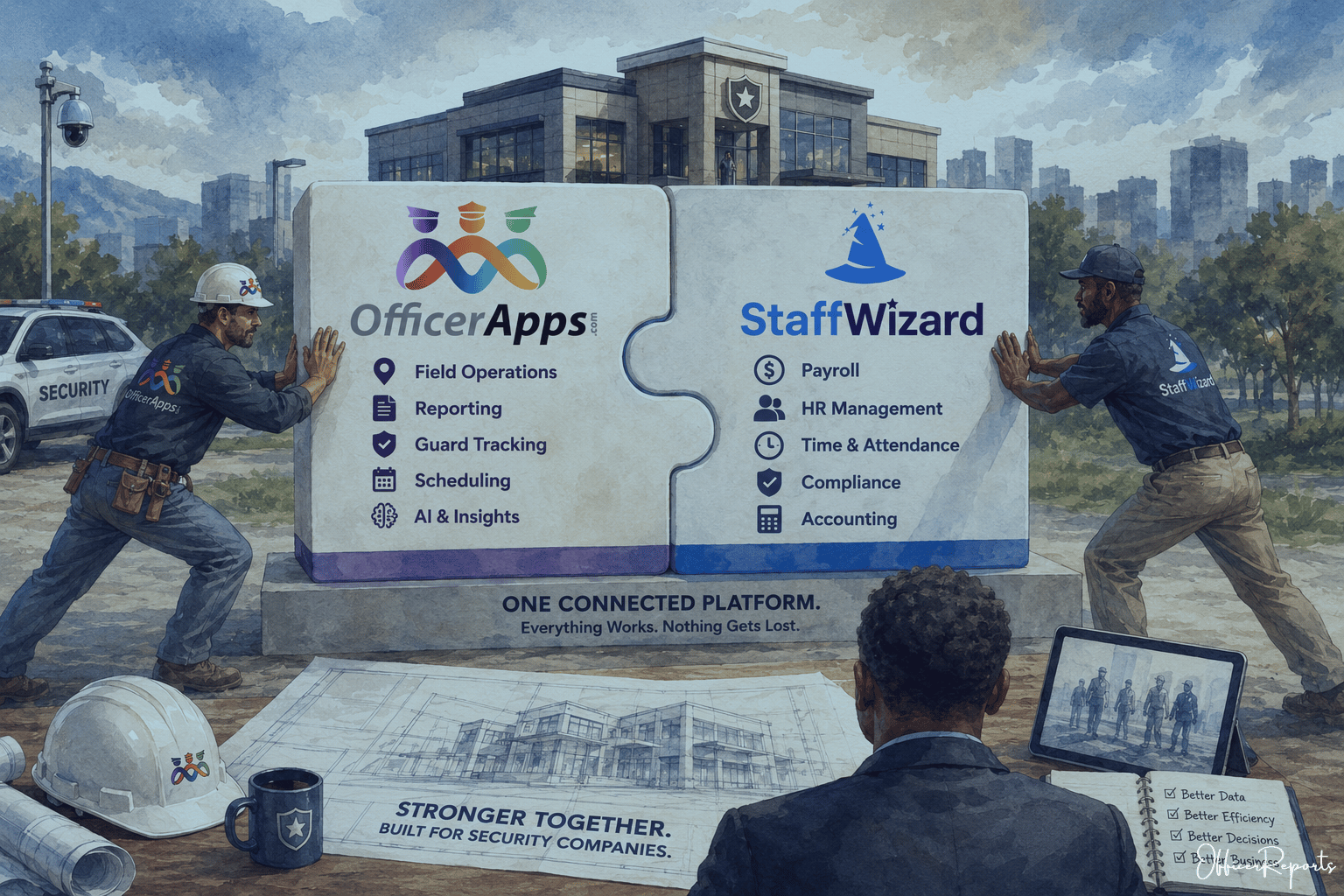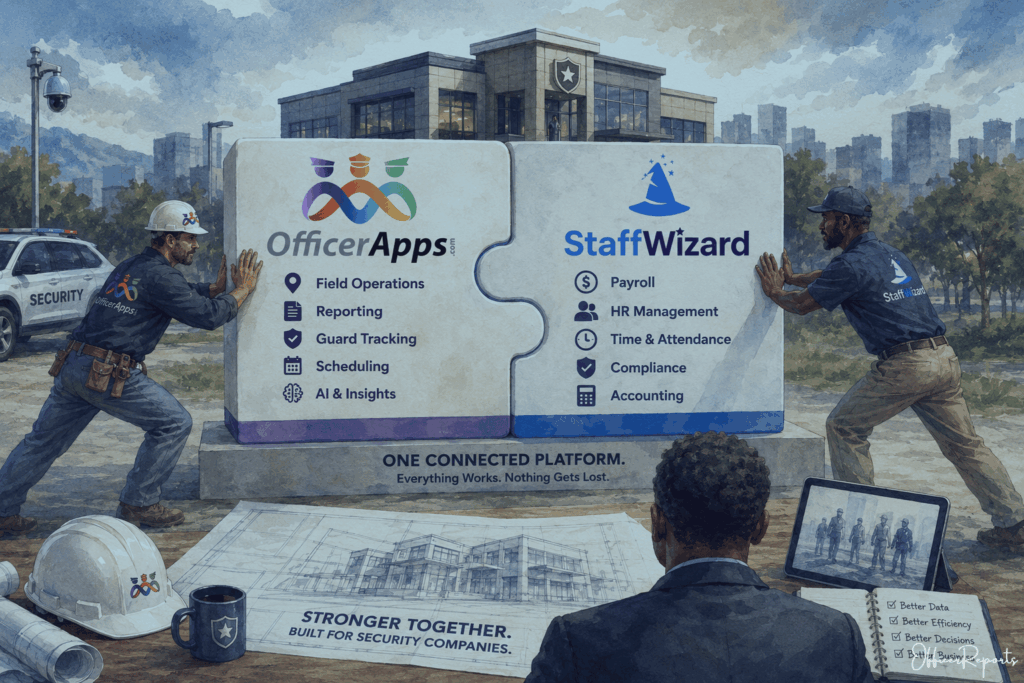
If you were building a house, you probably would not hire the same person to do the framing, plumbing, electrical work, roofing and HVAC. You would hire specialists, because each of those trades requires different expertise, different tools and years of experience to do well. What makes the project successful is not one person pretending to be an expert at everything. It is a group of skilled contractors coordinating their work so the finished house operates as one complete system.
I think security software is moving in the same direction.
For years, the software industry has trained customers to believe that the ideal solution is an all-in-one platform. The assumption is understandable. If scheduling, reporting, payroll, HR, accounting, recruiting and billing all come from the same company, the experience should be simpler.
But there is a difference between having everything in one place and having the best version of everything. That distinction matters.
The Hidden Cost of Trying to Build Everything
Building good software in one discipline is difficult. Building exceptional software across ten or fifteen completely different disciplines is much harder.
Every software company has finite engineering resources. Product teams have to decide where developers spend their time, which problems get solved first and which parts of the platform receive the most attention. The broader the product becomes, the more those resources are divided. Eventually, something has to give.
A company might be excellent at scheduling but average at payroll. It might have a strong accounting platform but mediocre field reporting. It may have built a good recruiting system while its mobile tools lag behind. The platform can still check every box on a feature comparison sheet, but checking the box and being best-in-class are very different things.
That is the problem with the all-in-one philosophy when it is taken too far. Customers may believe they are getting excellence across the entire platform when what they are actually getting is convenience combined with a lot of acceptable functionality.
For security companies, that tradeoff can be particularly expensive because the systems running the business touch nearly every part of the operation. Security guard payroll affects employees and margins. Field management affects service quality. Reporting affects client relationships. Scheduling affects overtime. Accounting affects whether management understands the financial health of the business.
These are not minor features. They are separate disciplines.
We Considered Building Payroll Ourselves
At OfficerApps, we have faced this decision directly.
Security guard payroll is a logical extension of the information already flowing through an operational platform. We know when an officer was scheduled, when that officer clocked in, where the officer worked and how many hours were recorded. On the surface, building payroll seemed like a natural next step. We considered doing it.
Then we had to ask a more important question: What would we stop building in order to build payroll? Payroll is not simply taking hours and multiplying them by a wage. A serious payroll platform has to deal with taxes, deductions, garnishments, multiple states, multiple business entities and a long list of regulatory and accounting requirements. Doing it correctly requires significant engineering investment and ongoing expertise.
Every developer we assigned to recreating those capabilities would be a developer who was no longer improving our reporting, guard tracking, field operations, or AI security guard management software.
That is when the decision became much clearer.
The question was not whether we were capable of building payroll. The question was whether rebuilding payroll was the best use of our resources or the best outcome for our customers. We decided it was neither.
Sometimes the Better Product Decision Is Not to Build
Software companies naturally want to build things. There is a certain pride that comes with owning every part of the technology stack, and there can be strategic advantages to controlling more of the product.
But good product strategy sometimes requires the discipline to recognize when someone else already does something extremely well. StaffWizard had already made the investments we would have needed to make.
Its back-office technology and security guard payroll capabilities were built specifically around the needs of security companies. The company had spent years solving problems specific to the industry and developing functionality that broader payroll platforms do not necessarily prioritize. Just as important, its customers already valued those back-office capabilities.
Recreating what StaffWizard had already built would not have created much additional value for the customer. It would simply have meant two companies spending engineering resources solving many of the same problems.
StaffWizard faced the same question on the operational side of the business. OfficerApps had already spent years developing reporting, guard tracking, field operations and AI-driven capabilities for security companies. There was little reason for StaffWizard to recreate those systems either.
The more we looked at the problem, the more obvious the answer became.
Instead of both companies trying to become good at everything, we could each stay focused on what we already did well.
Customers Do Not Really Want One Vendor
This is where I think the conversation around all-in-one software often gets confused. Most customers do not actually care whether one company owns every piece of technology they use. What they care about is whether their business works smoothly.
They do not want an employee entered into three systems. They do not want payroll teams reconciling hours manually. They do not want accounting information isolated from operations. They do not want managers copying data into spreadsheets because two applications cannot talk to one another.
Those are legitimate problems, and historically they created a strong argument for buying everything from one vendor. But the underlying need was never really one vendor. The need was one connected experience. That is an important difference.
If specialized applications are poorly integrated, best-of-breed technology can create its own headaches. A company may end up with exceptional individual tools but spend too much time moving information between them. In that environment, the customer effectively becomes the systems integrator.
That is not a good solution either. For the specialist model to work, the specialists have to coordinate.
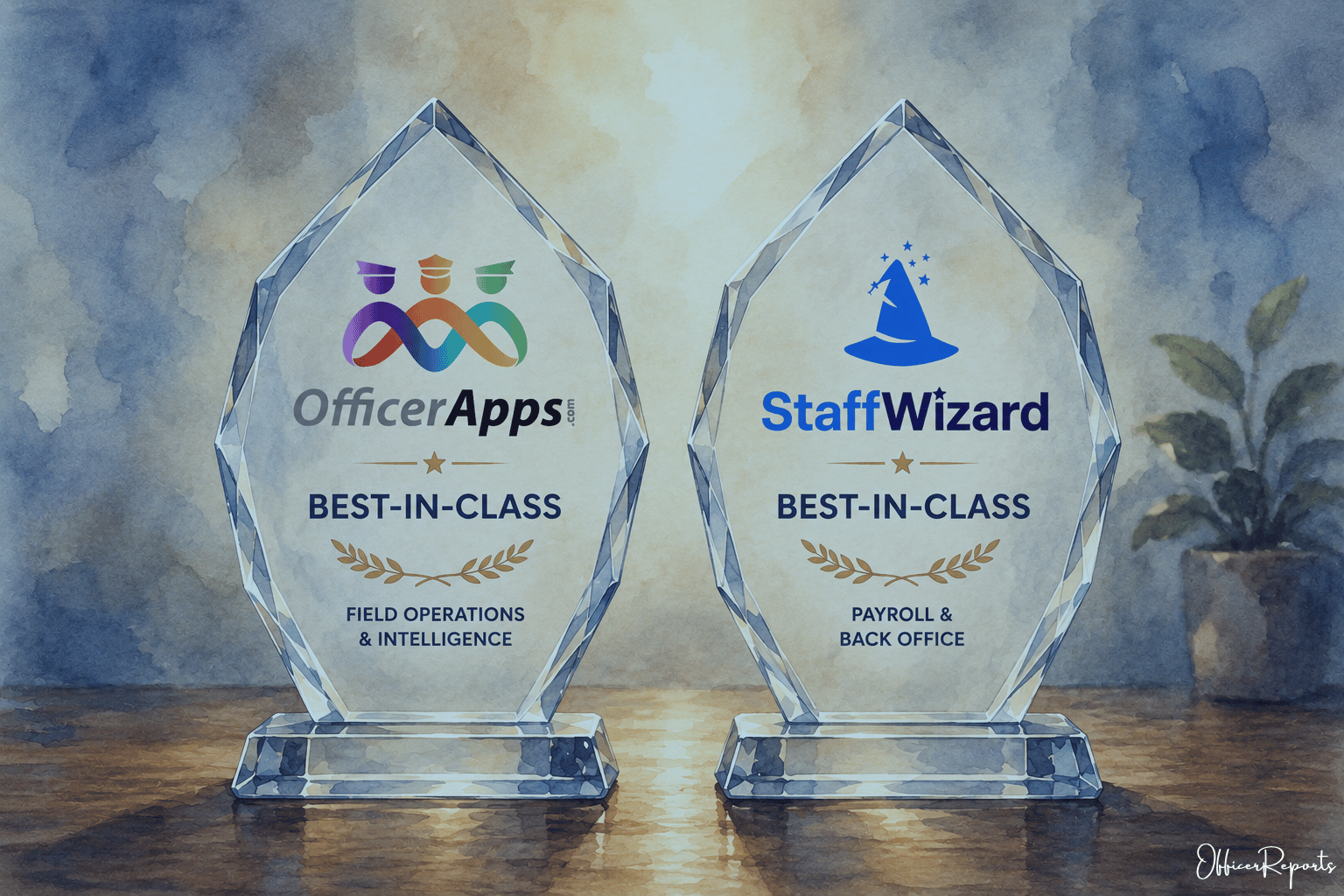
Best-in-Class Requires Real Partnership
Going back to the house analogy, the plumber cannot simply install pipes wherever he wants and tell the electrician to work around them. The electrician cannot ignore where the cabinets are going. The individual contractors have to understand how their work affects everyone else. Software partnerships have to operate the same way.
Both companies have to accept that their product will never contain every capability the customer needs. They have to be comfortable relying on partners to fill some of those gaps, and they have to design the customer experience around that reality.
That requires something deeper than a basic integration. Information has to move naturally between systems. Workflows need to continue across platforms. The customer should not constantly be reminded where one application stops and another starts. A best-in-class strategy only works if the specialists are willing to coordinate deeply enough that the customer experiences the result as one connected system.
That is the philosophy behind the partnership between OfficerApps and StaffWizard.
OfficerApps can remain focused on the operational side of a security company, including reporting, guard tours, mobile patrol, tracking and AI security guard management software. StaffWizard can remain focused on employee management, security guard payroll, accounting and other back-office requirements.
The companies remain independent, but the customer should not have to manage the complexity created by that independence. That is what specialization looks like when it is done correctly.
The Future May Belong to Ecosystems, Not Platforms
I think this idea eventually extends well beyond payroll. There are specialized companies building cameras, insurance products, uniforms, accounting systems, employee benefits, financing tools and other services used by security companies every day.
OfficerApps does not need to become an insurance company. We do not need to manufacture cameras or uniforms. We do not need to rebuild every business service our customers might someday use.
What we can do is look for companies that are exceptionally good at those things and find ways for those capabilities to work with the rest of the customer’s operation.
That changes the role of the software company. Instead of saying, “We have to own every answer,” the technology provider can say, “We need to help you connect to the best answers.”
I believe that is where the industry is headed.
As integrations, APIs and MCP servers become more capable, the technical reasons for forcing every function into one application become weaker. Customers will have more freedom to assemble technology around the way they actually run their businesses rather than adopting every module simply because it happens to come from the same vendor.
This is also where technologies like Connect become important. Both OfficerApps and StaffWizard recognize that customers increasingly want to manage their software in ways that may not be native to either platform. They want more flexibility in how information moves, how systems communicate and how they interact with their data. Giving them that flexibility is part of what makes a connected ecosystem more useful than a closed platform.
The future may not belong to the company that builds the most features.
It may belong to the companies that know what they are best at, connect deeply with other specialists and give customers the freedom to assemble the technology stack that best fits their business.
Specialization Creates More Room for Innovation
There is another reason I like this model. Every hour spent recreating mature technology is an hour that cannot be spent solving a problem that has not been solved yet.
If OfficerApps spent the next several years building a payroll engine, we might eventually produce a good payroll product. But during that same period, what improvements would we not make to field reporting? What new capabilities would we delay in OfficerIntelligence? What operational problems would remain unsolved because our engineering resources were focused somewhere else?
The same is true for StaffWizard. If its developers were spending their time recreating advanced guard reporting and tracking functionality, they would have less time to improve the back-office tools their customers already value.
Partnership allows both companies to keep pushing deeper into their specialties.
That is a better use of engineering resources, but more importantly, I believe it is a better outcome for customers. Why recreate the wheel if someone else has already spent years building a very good wheel? Connect the wheel to the vehicle and keep working on the parts nobody has figured out yet.
Security Companies Should Ask a Different Question
When security company owners evaluate technology, feature lists make it easy to compare vendors by counting boxes.
Does it have scheduling? Does it have reporting? Does it have payroll? Does it have accounting? On paper, one platform can appear more complete simply because it contains more modules.
But that may not be the most useful way to evaluate something as important as the technology running your business. A better question is whether the provider is genuinely excellent at each critical function.
How good is the operational technology? How capable is the security guard payroll platform? How reliable is the accounting system? How much depth exists in reporting, tracking and AI security guard management software?
Then there is one final question that matters just as much:
Can those systems work together?
That is ultimately what we are trying to accomplish with StaffWizard. Two independent companies do not have to pretend that each one is the best at everything. StaffWizard can concentrate on employees, payroll and the back office. OfficerApps can concentrate on field operations, reporting, tracking and AI. Both companies can continue improving what they already understand while working together to make those capabilities feel like one coordinated ecosystem.
If you were building a house, you would want a great electrician and a great plumber. You would also expect them to coordinate their work.
There is no reason we should expect anything less from the technology running a security company.