Most security companies treat objections as something that happens after the security guard services proposal is sent. The company presents its plan, waits for the prospect to review it, and then responds to any questions or concerns that come back. Most concerns are about price, staffing, supervision, accountability, or whether the company can handle the transition without creating more problems for the client.
By the time the objection is communicated, the buyer’s concern is usually already present. The buyer may not have said it out loud yet, but they have already started forming opinions about risk, clarity, cost, and confidence. That is why a strong security guard services proposal should not simply describe what your company will provide. It should help address the concerns a buyer is likely to have before they slow the deal down.
This is where AI can be useful for security guard company owners. Not because it can generate a polished answer to an objection after the fact, but because it can help identify the patterns and signals that point to objections before they are ever voiced. Used correctly, AI becomes a tool for improving the thinking behind the proposal, not just the writing inside it.
Objections Usually Form Before They Are Spoken
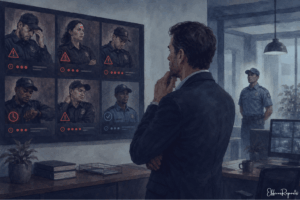
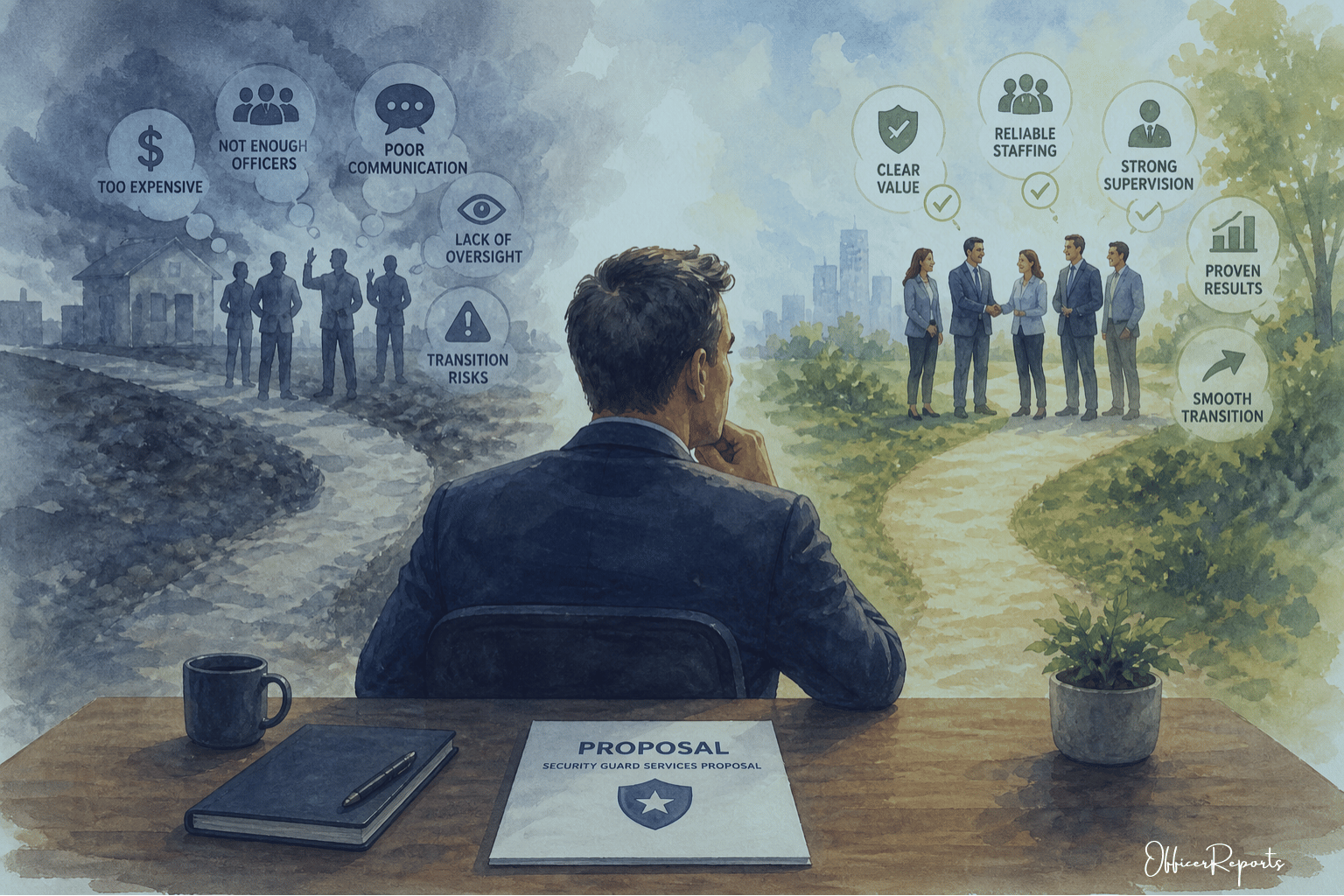
In the security guard industry, objections rarely come out of nowhere. They usually come from some uncertainty that a buyer has about your company. A buyer may be unsure whether you can consistently staff the contract. Or they may be concerned about officer turnover, communication gaps, reporting quality, or whether switching providers will create operational disruption.
There is also internal pressure that security companies do not always see. The person reviewing your security guard services proposal may need to justify the recommendation to procurement, finance, legal, or senior leadership. Even if that person believes your company is the right fit, they may still need to answer questions from other stakeholders.
That is why objections should be viewed as signals, not resistance. When a buyer questions your price, they may not simply be asking for a discount. They may be telling you that the difference between your company and the lower-priced provider is not clear enough. When they ask how problems will be handled, they may be thinking about a past provider that failed them.
A good proposal recognizes this reality. It does not wait for the buyer to express every concern. It anticipates where uncertainty is likely to arise and provides clarity before it becomes an objection.
Why Your Security Guard Proposal May Miss the Real Concerns
Many security companies write proposals from the company’s point of view. They explain their experience, their services, their coverage plan, their technology, and their pricing. All of that may be necessary, but it is not always enough. The buyer is reading the proposal through a different lens.
The buyer is asking practical questions. Can this company do what it says it will do? Will the officers show up? Will the supervisors pay attention after the contract starts? Will reports be useful? Will problems be communicated quickly? Will choosing this company reduce risk or create more work for our team?
Those questions are not always stated directly. They show up in pauses, follow up questions, vague responses, delayed decisions, and requests for clarification. Security companies often miss these signals because they focus only on what the buyer says, not what the buyer may be implying.
Another reason companies miss objections is that they treat every opportunity as unique. Every site has its own details, but many buyer concerns repeat across deals. If a company does not review past proposals, lost opportunities, and prospect communications in a structured way, those patterns remain hidden. The same objections keep appearing, but the company experiences them as separate events rather than symptoms of a broader issue in the sales process.
The Role of AI in Creating a Security Guard Services Proposal
The most useful role of AI is not to make a proposal sound more impressive. A security guard services proposal does not need inflated language. It needs clarity, relevance, and a strong understanding of how the buyer will evaluate risk.
AI is valuable because it can help security company owners recognize patterns across past deals. It can review old proposals, notes, emails, and lost opportunities to identify the most frequently recurring concerns. It can show where buyers tend to hesitate, where proposals may be too vague, and where the company may be assuming the buyer understands something that has not actually been explained.
This changes the way AI is used in crafting proposals. Instead of treating it as a shortcut for writing, the owner can use it as a thinking tool. It can help pressure test whether the proposal is clear enough, whether the operational model is well explained, and whether the buyer has enough information to defend the decision internally.
That distinction matters. Security is an operational business, so buyers are not simply purchasing hours. They are buying confidence that the right people will be in the right place, that expectations will be followed, and that problems will be handled before they become bigger issues. A proposal that does not address those concerns leaves too much work for the buyer.
Using AI to Find Patterns in Past Deals
One of the most practical ways to use AI is to review past opportunities. A security company can gather a set of proposals, sales notes, emails, and outcome information, then use AI to look for recurring themes. The goal is not to create a complex analytics project. The goal is to better understand where uncertainty has shown up before.
For example, AI may reveal that lost deals often included follow up questions about supervision. It may show that prospects frequently asked for clarification around reporting, escalation, or officer replacement. It may identify that certain proposals described services clearly but did not explain how the company would manage accountability after the contract began.
That kind of review gives an owner a more useful view of the sales process. Instead of saying, “We lost because of price,” the company can ask a better question: “Did our proposal make the value clear enough for the buyer to justify the price?”
This is especially important in competitive bids. If the buyer cannot easily see the operational difference between providers, the lowest price becomes easier to choose. A stronger security guard services proposal should reduce that risk by making the company’s operating model easier to understand and easier to defend.
Pressure Testing the Proposal Before It Is Sent
AI can also help pressure test a proposal before it reaches the buyer. This is one of the simplest and most useful applications for security guard companies.
Before sending a proposal, the owner or sales leader can upload the RFP and ask AI to review the proposal from the buyer’s perspective. Where might the buyer hesitate? What questions are unanswered? Which claims need more support? What parts of the proposal are too vague? Where might procurement, finance, operations, or leadership push back?
This process can reveal problems that are easy to miss when you are close to the deal. A proposal may sound clear to your team because your team already understands the operation. But the buyer may not know how your supervision works, how your reporting process differs from a competitor’s, or how you handle staffing issues when an officer calls off.
The best time to discover those gaps is before the proposal is sent. Once the buyer has already formed a concern, the company has to recover momentum. When the proposal answers likely objections in advance, the sales process feels more confident and less reactive.
Viewing the Security Guard Services Proposal Through Different Buyer Perspectives
A security guard services proposal is rarely reviewed by only one type of buyer. The main contact may care about operations, but others may influence the final decision. Procurement may compare pricing and contract terms. Finance may question the cost. Legal may focus on risk. Senior leadership may care about reputation, consistency, and whether the provider can support a larger business need.
AI can help simulate those different perspectives. This allows the company to evaluate whether the proposal gives each stakeholder enough clarity to feel comfortable moving forward.
From a procurement perspective, the proposal should make the scope clear and reduce confusion around what is included. From an operations perspective, it should explain how staffing, supervision, communication, and incident response will work in practice. From a finance perspective, it should help connect cost to risk reduction, consistency, and fewer operational surprises. From a leadership perspective, it should show that the company understands the importance of reliability and accountability.
This does not mean the proposal should become longer than necessary. It means the proposal should be more intentional. Every section should help the buyer understand not only what you provide, but why it matters to the decision they are trying to make.
Preparing Clarity Before Objections Appear
Many objections can be reduced with better clarity. If the buyer does not understand how your company supervises officers, they may ask about accountability. If they do not understand how you handle call offs, they may worry about coverage. If they do not understand what makes your service different, they may focus on price.
A strong security guard services proposal should prepare that clarity in advance. It should not simply say that your company provides reliable service. It should explain how reliability is supported. It should not simply say that supervisors are involved. It should describe what that involvement looks like. It should not simply say that reports are available. It should explain how reporting helps the client understand what is happening at their site.
AI can help identify where the proposal relies on claims instead of explanations. That is an important difference. Buyers do not need more claims. They need enough practical detail to believe that the company can execute.
This is where experienced operators have an advantage. They understand the real issues that create client frustration after a contract begins. They know where staffing breaks down, where communication fails, where expectations are misunderstood, and where service quality becomes inconsistent. AI can help organize that knowledge into a proposal that answers the buyer’s concerns with more discipline.
How This Changes the Security Sales Process
When objections are not anticipated, the sales process becomes reactive. The proposal is sent, the buyer hesitates, and the company waits for feedback. If price becomes the focus, the company tries to defend its value. If the buyer asks about staffing or supervision, the company provides more explanation after the concern has already surfaced.
Using a reactive approach to the security guard services proposal process creates friction. It slows momentum and gives the buyer more time to compare providers on price alone. It can also make the company appear less prepared, even when the operation itself is strong.
When objections are anticipated, the sales process becomes more controlled. The proposal does more of the work upfront. The buyer understands the operating model sooner, and internal stakeholders have clearer information. In this scenario, the company is not forced to defend every point after the fact because the proposal has already addressed the most likely concerns.
Taking this approach does not guarantee that every deal will be won. Some buyers will still choose the lowest bid. Some opportunities will not be the right fit. But a proposal that reduces uncertainty gives the company a stronger chance of being evaluated on value, execution, and trust rather than price alone.
Objections Are Unresolved Uncertainty
The real insight that I am attempting to share for security company owners is that objections are not always disagreements. More often, they are unresolved uncertainty.
A price objection may mean the buyer does not understand the difference between your company and another provider. A staffing objection may mean the buyer is unsure whether your company can deliver consistently. A supervision objection may mean the buyer has not seen enough evidence that problems will be caught and corrected.
AI helps identify that uncertainty earlier. It can review past deals, analyze communication patterns, pressure test proposals, and simulate buyer perspectives. It can help the company see where buyers may hesitate before the hesitation becomes visible.
But AI does not replace the owner’s judgment. It does not understand the business better than the people running it. Its value comes from helping experienced operators think more clearly, review more consistently, and prepare more thoroughly.
A Better Way to Compete
Security guard company owners know that price will always matter. Buyers have budgets, procurement teams have requirements, and competitors will continue to submit lower bids. That part of the market is not going away.
The question is whether your security guard services proposal gives the buyer enough clarity to understand why your company is the better decision. If the proposal does not answer that question, objections become more likely. If it does answer that question, the buyer has a clearer path to confidence.
Successful security guard companies do not wait for objections. They design their process to reduce the need for them. They understand that a proposal is not just a document. It is part of how the buyer evaluates risk, trust, and operational confidence.
AI can help make that process sharper. It can help reveal patterns, expose weak points, and prepare better explanations before the buyer asks for them. The goal is not to become better at arguing with objections. The goal is to build a sales process where fewer objections need to be raised in the first place.
That is a more disciplined way to sell security services, and for owners who want to win better contracts without racing to the bottom on price, it is a more durable way to compete.
By Courtney Sparkman

 Courtney is the founder and CEO of OfficerApps.com, a security guard company software provider, specializing in security guard management software, and publisher of Security Guard Services Magazine. He is a renowned author and security industry syndicator who also hosts an active YouTube channel, helping thousands of his subscribers to grow their security guard services companies.