Most companies eventually reach a point where growth becomes more difficult. The early opportunities have already been captured, competitors begin offering similar products, and customers have more choices than they did before. At that stage, continued growth requires more than adding features, increasing advertising, or hiring additional salespeople. It requires meaningful product differentiation.
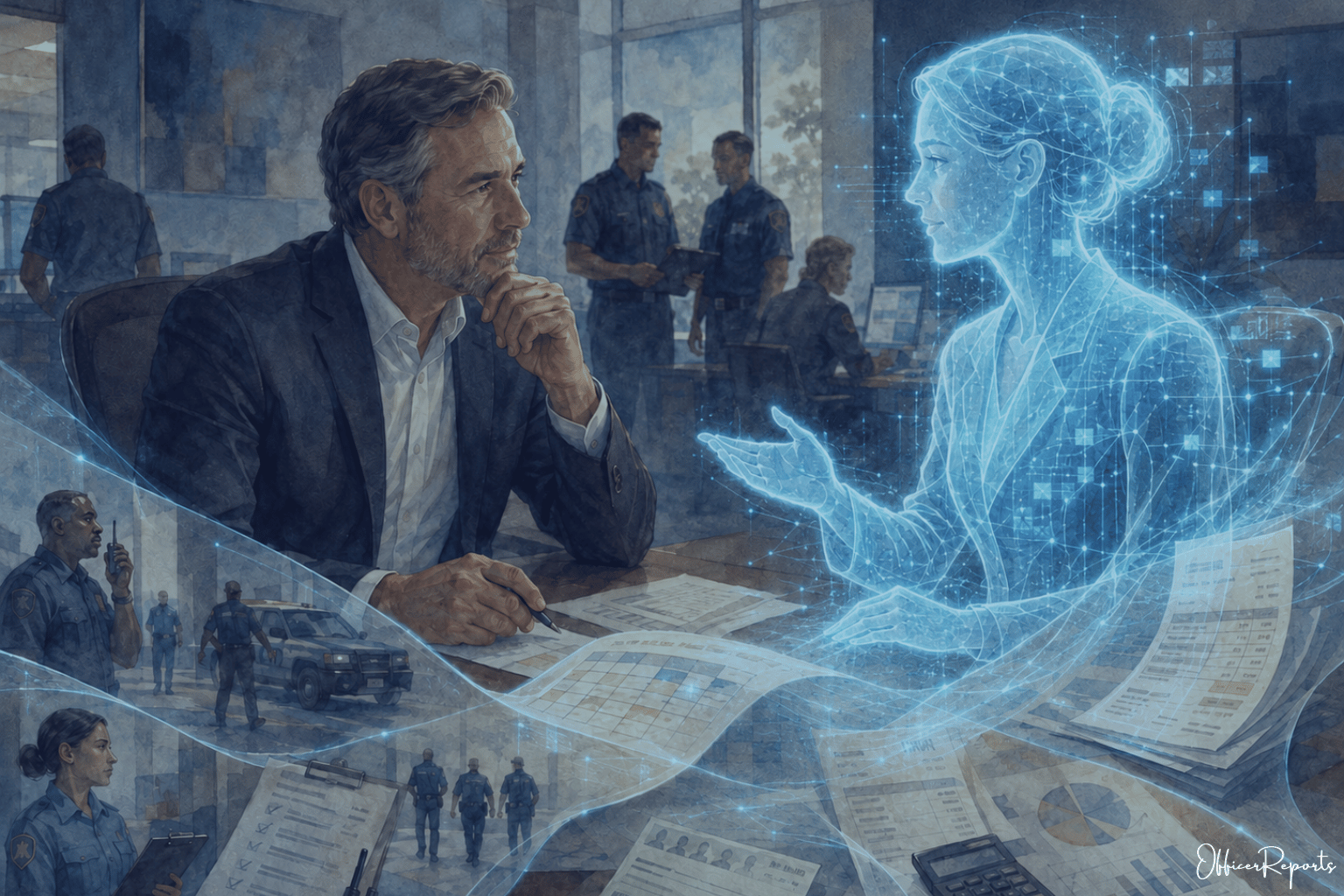
OfficerApps has faced that challenge several times. We began with a relatively narrow purpose, but over time the company expanded into new areas of the security industry. From the outside, that growth might appear to be the natural result of building more software products or adopting new technology. Those decisions played a role, but they were not the real source of our growth.
The more important decision came early in the company’s history, when we stopped thinking of ourselves primarily as a software company. Instead, we decided that our job was to solve problems for security guard companies. That distinction became the foundation of our product differentiation and influenced nearly every major product decision we made afterward.
Product Differentiation Starts With the Problem, Not the Feature
As you all know, my background was not in software development. Before starting OfficerApps, I spent nearly a decade working inside security guard companies. I understood many of the operational, financial, and customer-service challenges because I had dealt with them personally.
As I began listening more carefully to customers, I recognized that many of those same problems still existed. In some cases, the industry had simply learned to tolerate them. Owners and managers had created manual workarounds, accepted inefficient processes, or assumed certain frustrations were unavoidable parts of running a security company.
What stood out to me was that very few companies were seriously trying to solve those problems. Most software providers were focused on improving familiar features, matching competitors, and building variations of tools that already existed. That approach can keep a company competitive for a period of time, but it rarely creates durable product differentiation.
We began asking a different question. Instead of asking what feature should be added next, we asked what problem was making it harder for security companies to build stronger businesses.
Sometimes the answer led us deeper into guard management software. At other times, it took us into areas that were not part of our original product vision. That willingness to follow the customer problem, rather than remain confined by the existing product, became one of the main reasons we continued to grow.
Copying Competitors Eventually Leads to Price Competition
Many companies approach growth by studying what their competitors are doing. They compare features, pricing, marketing messages, and service offerings, then attempt to close whatever gaps they find. Competitive research is useful, but it can also become a trap.
When every company watches the same competitors and copies the same features, the market eventually sees those companies as interchangeable. The differences become increasingly difficult to explain, and customers begin making decisions based on price.
That is why real product differentiation rarely begins with a competitor’s feature list. It begins with a customer problem that has not been solved well.
The most valuable opportunities are often not completely new problems. They are frequently old, persistent problems that customers have learned to work around. Because the problem has existed for years, people assume it must be unavoidable. That is where an attentive company can find an opportunity that competitors have missed.
This was the case with security contract pricing.
How OfficerBilling Created Product Differentiation
For years, I wrote about how to price security guard contracts and sell security services. Those articles attracted considerable attention because many security company owners did not fully understand the true cost of providing guard service.
Even today, some owners believe the appropriate way to price a contract is to take the officer’s wage and apply a percentage markup. That method appears simple, but security contract pricing is far more complex.
A proper billing rate must account for payroll taxes, SUTA, FUTA, workers’ compensation, insurance, overtime exposure, recruiting, turnover, uniforms, training, supervision, administrative expenses, and the profit necessary to operate a healthy company. Ignoring those expenses does not make them disappear. It simply increases the likelihood that the company will win an unprofitable contract.
Smaller security companies sometimes assume larger competitors are winning work by intentionally pricing contracts at a loss. In many cases, the larger company simply has a more accurate understanding of its cost structure and greater control over the inputs required to provide the service.
There is also a sales problem created by arbitrary markup pricing. When a prospective client asks for a lower rate, the security company may be unable to explain why the markup is 20 percent, 30 percent, or 50 percent. Without a clear connection between the price and the actual cost of service, the negotiation becomes a discussion about how much the company is willing to remove.
We created OfficerBilling to address that problem.
The platform helps security company owners calculate the actual expenses associated with a contract and develop a billing rate that reflects those costs. It also gives them greater transparency when speaking with prospects. Instead of defending an arbitrary markup, the owner can explain the business reasons behind the proposed rate.
That changes the nature of the conversation. The price is no longer simply a number that can be reduced without consequence. It reflects the real cost of providing reliable service.
OfficerBilling was an example of product differentiation built around a customer problem rather than a software feature. It did not merely give customers another way to create a proposal. It helped them make one of the most important financial decisions in their business: determining whether a contract could actually be profitable.
Meaningful Product Differentiation Often Requires Education
Solving an important problem does not automatically make a product easy to sell. In fact, some of the most valuable solutions create longer and more difficult sales processes because they require customers to think differently.
We learned this with OfficerBilling. Many smaller security company owners had never been taught how SUTA, FUTA, workers’ compensation, payroll taxes, and other expenses should affect contract pricing. When they first saw the platform, some were intimidated by the number of inputs and unfamiliar terminology.
We could not simply demonstrate the software and assume that customers would immediately understand its value. In many cases, we had to walk through the platform cell by cell and window by window. We had to define the terms, explain why each cost mattered, and show how overlooking those costs could damage the profitability of a contract.
That made the sales process much longer. It would have been easy to conclude that customers did not want the product or preferred the simpler method. The more accurate conclusion was that the problem was important, but the market needed education before it could fully appreciate the solution.
This is an important part of product differentiation that companies often underestimate. When a product looks and behaves like everything else in the market, customers understand it quickly. When a product solves the problem in a fundamentally different way, the seller may first need to teach the customer how to think about the problem.
That education can slow the sale, but it can also strengthen the relationship. A company that helps customers understand their business more clearly becomes more than a vendor. It becomes a trusted source of expertise.
OfficerIntelligence Followed the Same Product Differentiation Strategy
Years later, we applied the same problem-solving approach to security reports.
The security industry has struggled with report quality for decades. Security officers generate large amounts of information, but many do not write clearly or consistently. Supervisors and managers may spend hours reviewing reports, correcting grammar, cleaning up descriptions, and trying to identify which events deserve attention.
Many security companies have accepted that workload as a normal part of the business. We saw it as another problem that had been tolerated for too long.
The larger issue was not simply that some officers were weak writers. The more significant problem was that important operational information was being buried inside a large volume of inconsistent reports. Managers and clients needed a way to understand what had happened without manually reading and editing every document.
Artificial intelligence created a practical opportunity to address that problem. Through OfficerIntelligence, we developed the Daily Security Brief, which reviews the information generated by security officers, identifies the most important activity, and presents it to stakeholders in a separate and more useful format.
The original officer reports remain unchanged. That distinction is important because we do not want artificial intelligence rewriting source documents or creating questions about the credibility of the original record. The Daily Security Brief organizes and presents the information while preserving the underlying report.
This allows managers to spend less time reviewing routine activity and makes significant incidents, trends, and concerns easier to identify. Although OfficerBilling and the Daily Security Brief solve very different problems, they were created using the same product differentiation strategy: find an expensive, persistent problem the industry has accepted and build a practical way to solve it.
Customers Often Need to Experience Differentiation Before They Trust It
The education challenge with OfficerIntelligence was different from the one we experienced with OfficerBilling. With OfficerBilling, customers needed to understand financial concepts. With artificial intelligence, customers first needed to understand what the technology would actually do.
People hear broad claims about AI, but those claims do not necessarily help them understand how the technology will operate inside their business. Some customers were concerned about accuracy. Others worried that AI would alter officer reports, replace managers, or make decisions that should remain in human hands.
Simply explaining the feature was not enough. Customers needed to see how the Daily Security Brief worked with their own reports and their own client portfolio.
That is why we began offering a seven-day trial. Once customers experienced the product, the conversation changed. They could see that the system was not replacing managers or supervisors. It was helping them process information more efficiently. They could also see that the original reports remained intact and that important activity became easier to identify.
In many cases, customers who were initially uncertain wanted to expand OfficerIntelligence across their entire portfolio after seeing it in action. That experience reinforced an important lesson: when product differentiation requires customers to adopt something unfamiliar, demonstration is often more persuasive than explanation.
A trial reduces the perceived risk and allows the customer to understand the value through experience.

Product Differentiation Requires Deep Customer Knowledge
Our ability to identify these problems came partly from experience. I had sat in many of the same seats as our customers. I understood the pressure of pricing contracts, managing officers, satisfying clients, reviewing reports, and trying to grow a security company without creating new operational problems.
That background gave us an advantage, but it also reveals an important lesson for security company owners. Many security leaders understand the guard side of the relationship extremely well. They know how to schedule officers, fill open posts, conduct supervision, and respond to incidents. However, they may not understand the client’s experience with the same level of depth.
A property manager, hospital administrator, retailer, school leader, or corporate security director sees the service through a different lens. They may be responsible for defending a budget, responding to tenant complaints, preparing for litigation, reporting incidents to senior leadership, or explaining why a vendor failed to perform.
Most security company owners have never held those positions. That means they must be more deliberate about learning what the client is actually trying to accomplish.
Knowing the customer requires more than asking whether the client is satisfied. It requires probing questions about what creates work, risk, frustration, and accountability inside the client’s organization. Security companies should understand what information clients must report to leadership, where vendor mistakes create additional work, which complaints occur most often, and what happens after a security incident report is submitted.
Those questions often reveal problems that are never included in a request for proposal. They also expose opportunities for product differentiation that competitors may never discover because they have not taken the time to understand the client’s business.
Four Principles Behind Our Product Differentiation
When I look at the products we have created and the decisions that shaped OfficerApps, four principles stand out.
The first is to look for problems others are not solving. It is difficult to build a differentiated company by following competitors and offering the same products in slightly different packaging. Real product differentiation often comes from addressing a persistent problem the market has ignored or accepted.
The second is to know the customer deeply. Lived experience is valuable, but it is not the only way to gain insight. Companies can learn by asking better questions, observing how customers use the service, and understanding the internal pressures those customers face.
The third is to be willing to educate the market. Some of the best solutions require customers to rethink the problem. That may create a longer sales process, but it can also produce a deeper and more defensible relationship. A company that helps customers make better decisions becomes more difficult to replace.
The fourth is to let the problem determine the product. Companies often become trapped by their existing services and attempt to force every customer problem into what they already sell. Sometimes meaningful growth requires a new process, a new service, a different technology, or an entirely new product.
Instead of asking how a problem can be fitted into the current offering, leaders should ask what it would actually take to solve the problem properly.
Security Companies Can Use the Same Approach
This way of thinking is not limited to software companies, but security companies will not create meaningful product differentiation by offering slightly better versions of the same services their competitors already provide. Better supervision, stronger reports, and faster response all matter, but they still keep the company inside the traditional boundaries of guarding.
The larger opportunity is to recognize that security companies often possess capabilities that are valuable well beyond security. They have people on site, experience operating around the clock, established training processes, field supervision, incident documentation, dispatch capabilities, and technology designed to coordinate activity across multiple locations. Those strengths can be applied to problems that are not traditionally viewed as security problems.
A property manager, for example, may need help verifying vendor work, monitoring vacant units, documenting property conditions, coordinating after-hours issues, confirming that critical tasks were completed, or identifying recurring operational problems before they become expensive. None of those services is strictly security related, yet a well-run security company may be unusually well positioned to provide them because it already has trained personnel, established accountability systems, and a daily presence at the property.
The same principle applies in other industries. A security company serving a hospital may be capable of supporting patient observation, workplace violence preparation, after-hours logistics, or compliance documentation. A company serving manufacturers may be able to assist with contractor control, safety observations, shutdown coordination, or emergency readiness. A provider working with retailers may find opportunities in inventory verification, store-opening and closing support, facilities observations, or multi-location issue escalation.
The point is not that every security company should pursue the same adjacent services. The point is that leaders should stop defining their capabilities only by the category in which those capabilities were originally developed.
A trained officer is not valuable only because that person can stand a post. That officer may also be capable of observing conditions, verifying activity, following procedures, documenting exceptions, escalating issues, and representing the client after hours. A dispatch center is not valuable only because it can communicate with officers. It may also be able to coordinate vendors, track service requests, and manage operational events across multiple locations. Reporting technology is not valuable only because it creates incident reports. It may also help a client understand property conditions, recurring failures, and patterns that affect the broader business.
This is where real product differentiation can emerge. Instead of asking how to sell more guard hours, security company leaders should ask where their existing people, training, systems, and technology give them an advantage in solving adjacent customer problems.
That requires a broader understanding of the client’s operation. The most useful question is not, “What additional security service can we offer?” It is, “What important work is the client struggling to complete, and do we already possess capabilities that could help?”
The answer may lead to services that do not look like traditional guarding at all. That is precisely why they can become powerful differentiators. Competitors that continue defining themselves only as providers of security labor may never consider those opportunities, while the company that does can become much more deeply embedded in the client’s operation.
The strongest security companies of the future may still provide officers, patrols, and response. However, their growth will increasingly come from applying those same operational capabilities to a broader set of business problems.
That is the difference between improving an existing service and creating meaningful product differentiation.
Product Differentiation Follows Relevance
OfficerApps does not continue growing because growth was our only objective. We grow because we continued trying to remain relevant to the changing problems security companies were facing.
That required us to move beyond the original product, enter areas that were difficult to explain, educate customers, and invest in solutions before the return was obvious. It also required us to accept that some of the best opportunities would not look obvious at first.
The question that has guided much of our growth has never been simply, “What else can we sell?” The more useful question has been, “What problem is making it harder for our customers to build successful companies, and are we willing to be the company that solves it?”
That question has taken us into unfamiliar territory more than once. It has also become the foundation of our product differentiation and one of the main reasons we have continued to grow.
By Courtney Sparkman

 Courtney is the founder and CEO of OfficerApps.com, a security guard company software provider, specializing in security guard management software, and publisher of Security Guard Services Magazine. He is a renowned author and security industry syndicator who also hosts an active YouTube channel, helping thousands of his subscribers to grow their security guard services companies.